




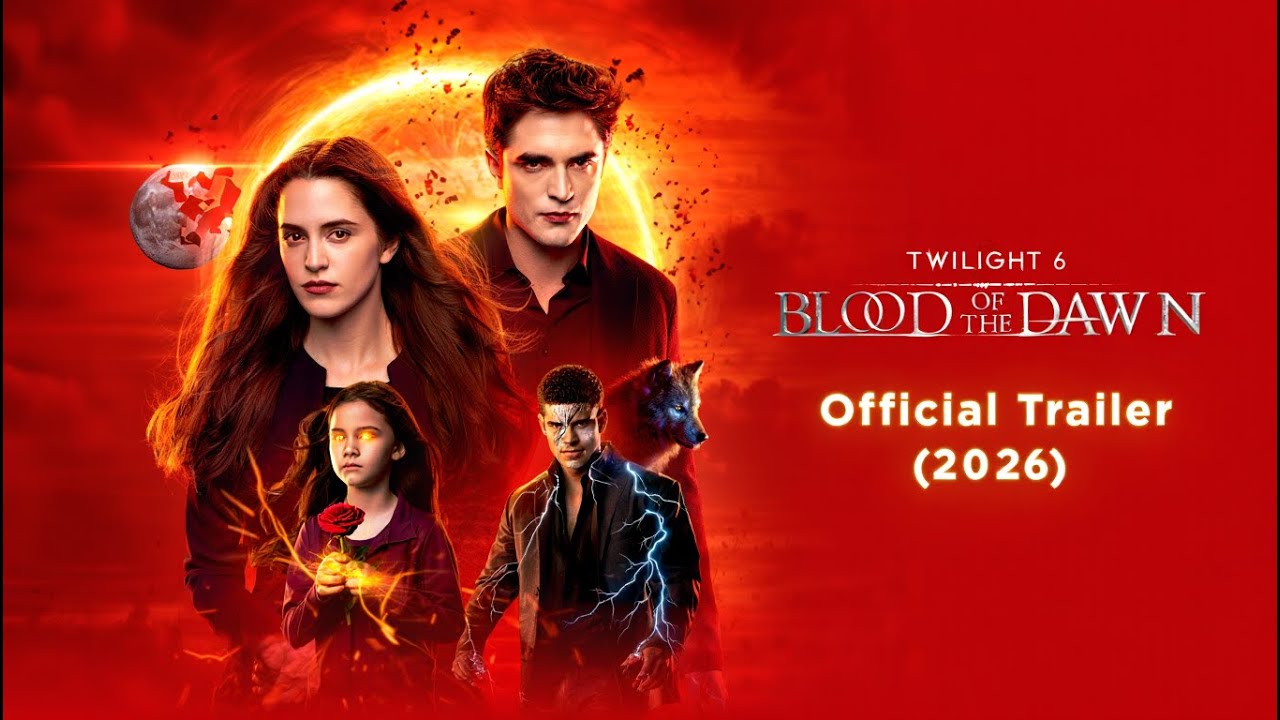
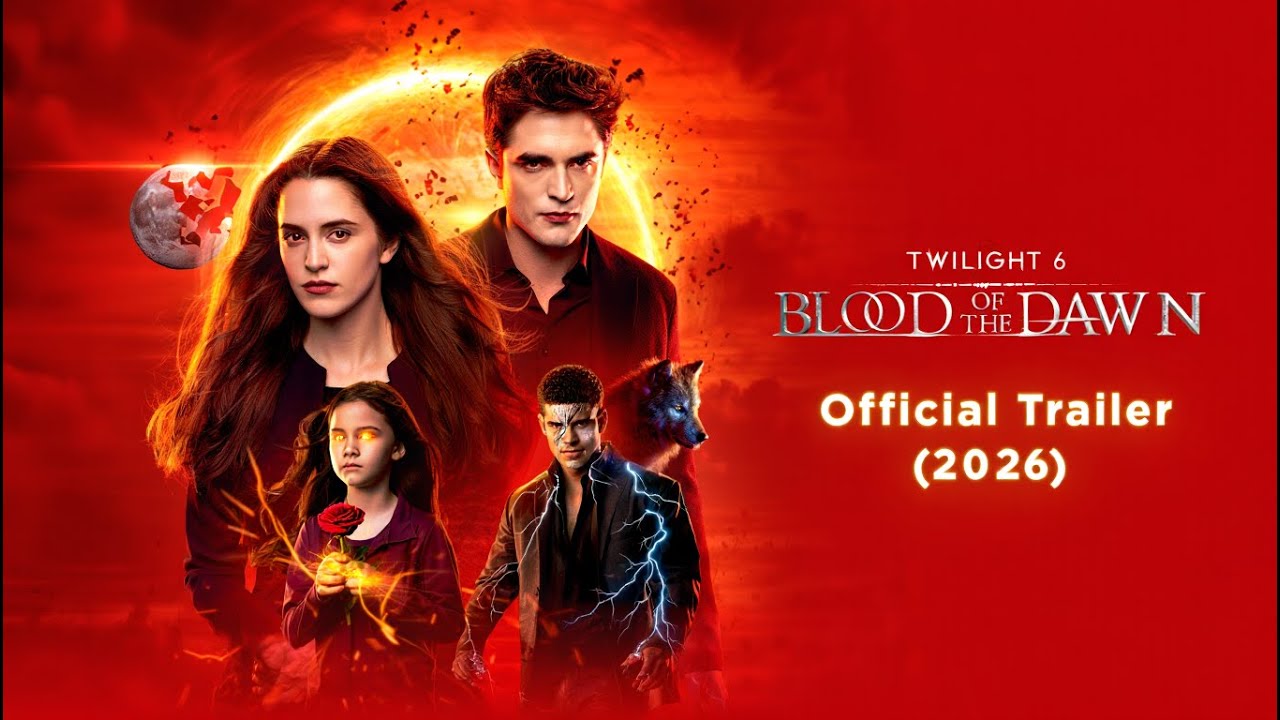
The Twilight Saga 6: Blood of the Dawn (2026) – A Blood-Red Sunrise
It’s been years since the world was first introduced to the captivating world of Twilight, a franchise that intertwined teen romance, supernatural elements, and a carefully constructed mythology into something that resonated with audiences across the globe. As we step into the world of The Twilight Saga 6: Blood of the Dawn, the latest installment in the saga, we find ourselves watching a more mature, darker, and emotionally complex evolution of characters we thought we knew so well. Directed with an assured hand, this film marks a decisive turn in the series, one that will undoubtedly leave both die-hard fans and newcomers contemplating the nature of love, sacrifice, and destiny.

The Plot: Immortal Conflicts and Shattered Alliances
Years have passed since the events of Breaking Dawn, and the saga’s central character, Renesmee (played by Mackenzie Foy), is now a grown woman caught between two worlds—immortal and human, vampire and wolf. This duality shapes the plot of Blood of the Dawn and presents a tension that runs throughout the film, driving the narrative forward. Renesmee’s inner conflict becomes the catalyst for the looming threat of the Children of the First Light, an ancient coven whose sole mission is to eradicate all hybrids, such as Renesmee, before the arrival of a prophesied “blood-red sunrise” that will reshape the order of the vampire world.

The conflict that ensues is not only one of survival but also one of emotional and moral complexity. Edward Cullen (Robert Pattinson), Renesmee’s father, is haunted by visions of his daughter’s death in the impending dawn, while his wife, Bella (Kristen Stewart), begins to unlock a more offensive side of her shield, a power that could potentially shatter minds and reconfigure the very rules of vampiric power. Meanwhile, Jacob (Taylor Lautner), forever bonded to Renesmee through imprinting, faces his own inner turmoil, torn between his loyalty to the Cullen family and his instincts as a wolf.

The Performances: A Strong Cast, New Dynamics
While the original Twilight cast returns in full force, there’s an evident shift in their performances. Kristen Stewart’s portrayal of Bella is more compelling than ever before. The actress taps into the darker, more complex layers of her character, revealing a side of Bella that we haven’t seen before—one that might be more dangerous than we can comprehend. Robert Pattinson’s Edward is as brooding and conflicted as always, but the burden of his fatherly love for Renesmee adds a depth that further complicates his moral compass.
However, it is Mackenzie Foy who truly shines in this installment. Her portrayal of Renesmee, now a woman straddling the lines between two worlds, is nuanced and captivating. Her chemistry with both Pattinson and Lautner brings an emotional resonance to the film that is essential for the narrative’s success. Taylor Lautner’s Jacob is more tortured than before, navigating his complex emotions as both protector and lover, making his character arc feel like the emotional heart of the movie.
Visuals and Cinematography: A Beautiful and Haunting World
The visual storytelling in Blood of the Dawn is nothing short of stunning. The snow-covered cliffs where the final battle takes place become a haunting and beautiful metaphor for the world the characters inhabit—a world where love, blood, and destiny collide under a blood-red sky. The special effects are used with purpose, never overshadowing the emotional weight of the story. The film’s hauntingly atmospheric cinematography, especially during the climactic scenes, evokes a sense of inevitability and tension that adds to the overall experience.
The Themes: Sacrifice, Love, and Destiny
At its core, Blood of the Dawn is a story about sacrifice—how much we are willing to give up for the people we love, and what we are prepared to lose to secure a future that may seem uncertain. The tension between fate and free will is explored with depth, with the characters constantly grappling with whether they can shape their destiny or whether it is already written in the stars. The “blood-red sunrise” is more than just a prophecy; it becomes a symbol of both hope and despair, a stark reminder that nothing in this world—immortal or human—is ever truly secure.
Conclusion: A Satisfying End to a Legendary Saga
The Twilight Saga 6: Blood of the Dawn may be the final chapter in the saga, but it’s a chapter worth remembering. With its emotionally charged performances, stunning visuals, and a plot that balances action with deep philosophical questions, this film delivers a fitting conclusion to the Twilight saga. It’s a film that will resonate with fans of the franchise, offering a resolution that feels earned and meaningful. As the final battle unfolds at sunrise, the saga’s central question is answered: love, blood, and sacrifice are what define not just these characters, but the world they inhabit.